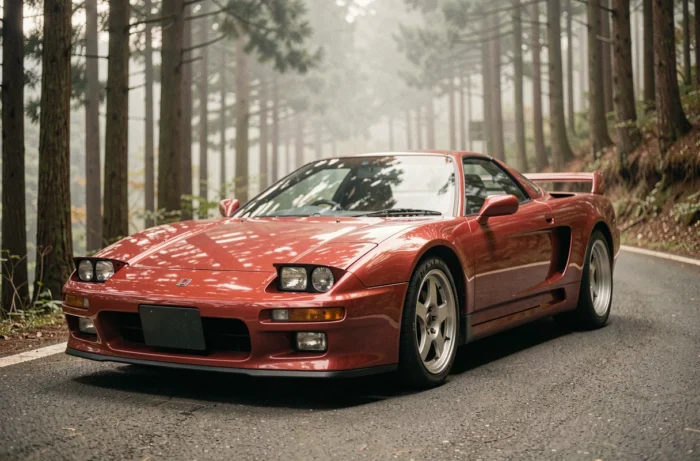
On track as well as on open roads, you don’t drive a first-generation NSX like you pilot the second. The chassis, the powertrain, the electronic management: everything changed between the NA1 released in 1990 and the NC1 produced from 2016. Understanding these differences also helps explain why these two cars attract radically different buyer profiles.
Aluminum chassis and hybrid architecture: two NSX driving philosophies
The first NSX made automotive history with its aluminum monocoque chassis, a first for a production sports car at the time. The result: a contained weight and rigidity that made the car usable every day without sacrificing track performance. The double-wishbone suspension completed the picture with a placement precision that many drivers compared to the best Ferraris of the time.
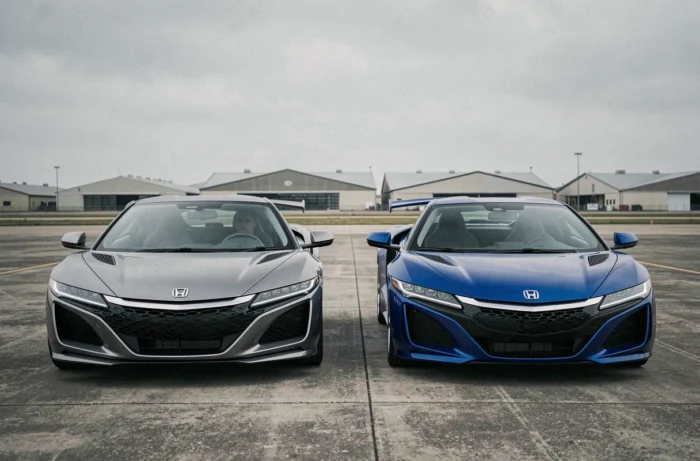
The second generation completely changes its approach. The NC1 relies on a hybrid powertrain that combines a central twin-turbo V6 with three electric motors. Two of these motors act on the front axle, creating a torque vectoring system that alters the trajectory in corners without driver intervention. We move from a car where the driver does everything to a car where the electronics redistribute power in real-time.
For those wanting to delve deeper into the technical comparison between the two generations, you can learn more on La Belle Auto where the topic is detailed from several angles.
In practice, this means that the NA1 rewards clean driving and punishes mistakes, while the NC1 smooths out the approximations. Feedback varies on this point: some owners find the new one too assisted, while others appreciate the confidence it inspires on wet roads thanks to the all-wheel traction.
Atmospheric VTEC engine vs. hybrid twin-turbo V6: what changes in daily driving
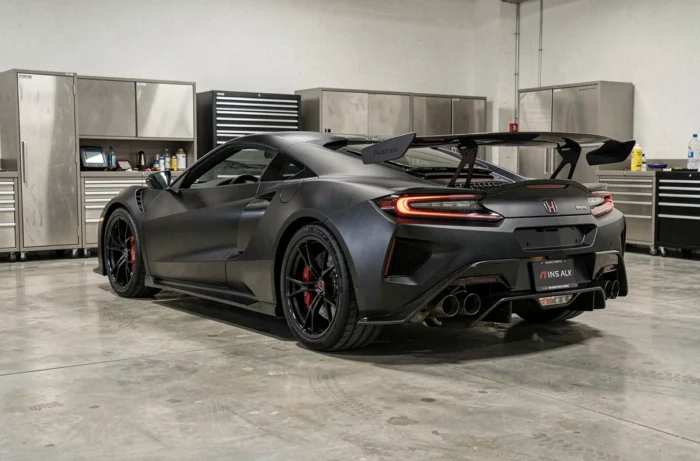
The V6 VTEC of the first NSX remains one of the most celebrated atmospheric engines in Honda’s history. Its linear rev-up and the variable timing switch beyond a certain RPM provide a direct mechanical feel. No turbo, no lag, no electric intervention: every acceleration is a pure dialogue between the right foot and the engine.
The NC1 operates differently. The twin-turbo V6 delivers its torque much lower in the rev range, and the electric motors fill in the gaps at low RPM. The result is a constant, almost linear push from idle to redline. In Quiet mode, you can even drive in all-electric for short distances, making the car surprisingly discreet in the city.
- NA1: atmospheric engine, manual transmission available, raw mechanical feel, relatively simple maintenance for a sports car of this category
- NC1: hybrid twin-turbo V6, dual-clutch automatic transmission only, torque available immediately, significantly higher technical complexity
- The manual transmission of the NA1 remains a decisive argument for purists, as the NC1 has never offered this option
The absence of a manual transmission in the second generation is probably the most divisive difference. For many Honda sports car enthusiasts, it’s a difficult concession to accept, even though the NC1’s dual-clutch transmission shifts gears with a speed that human hands cannot match.
End of NSX production and current status in the automotive market
The production of the second-generation NSX ended in 2022. Acura closed the chapter with the NSX Type S, a limited series designed as the last thermal model of the lineage. No direct successor has been confirmed to date, but Acura has indicated that the next chapter of the NSX name will be fully electric.
We find ourselves in an unusual situation: both generations are now collector cars, or on the verge of becoming so. The NA1, with over thirty years of existence, has already reached this status. The NC1, despite its recent age, has seen its values rise since production ceased, especially for the Type S.
What this means for a buyer today
Searching for a well-maintained NA1 requires patience and a thorough inspection. Corrosion points on the aluminum chassis, the condition of the timing belt, and the maintenance history are the three criteria that separate a good deal from a financial pitfall. A well-maintained example remains reliable and relatively economical to maintain compared to European sports cars of the same era.
For the NC1, the hybrid complexity requires a specialized maintenance network. The batteries, electric motors, and management electronics add checkpoints that the first generation completely ignored. In return, the NC1 offers a level of performance and daily versatility that the NA1 cannot achieve.
Honda NSX: two eras, two relationships to driving
What really distinguishes these two cars is not found on a technical sheet. The NA1 demands commitment: you feel the engine, you modulate the clutch, you place the car with your hands and feet. The NC1 demands trust: you let the electronics manage torque distribution and exploit the combined power without second thoughts.
- The NA1 suits drivers who want to actively pilot and accept limited comfort
- The NC1 targets those seeking supercar performance with realistic daily usability
- Both share Honda’s DNA: above-average reliability for the segment, driver-focused ergonomics, and decent visibility for mid-engine sports cars
Neither is objectively better than the other. They cater to different expectations, shaped by different eras of automotive history. The NA1 remains a benchmark of mechanical purity. The NC1 proves that hybridization can be integrated without betraying the spirit of a Honda sports car. The next chapter, if it arrives in all-electric form, will have to reckon with this legacy.