A belted blazer spotted on the spring-summer 2026 runways, worn as is to the office on a Monday morning, rarely produces the desired effect. The difference between a trend that works and a costume often comes down to a detail: was the piece chosen for its everyday use or for its effect in a photo?
Statement piece or updated basic: the sorting that changes the wardrobe
When looking at the 2026 collections, two categories of clothing coexist. On one side, pieces with strong visual impact (sheer fabrics, vinyl, bubble hems, sculptural draping). On the other, reimagined basics whose cut or material has simply evolved.
The former attract attention on social media and in magazines. They fuel the looks shared on Instagram and TikTok. The latter go unnoticed in photos, but they are the ones that stand the test of time.
To create wearable outfits for everyday life, it’s beneficial to invest in the second category and limit statement pieces to one or two per season. A good filter before buying: ask yourself if you would wear this garment three times in the same week without feeling like you’re repeating yourself. If the answer is no, it’s probably a showpiece, not a real wardrobe tool.
- 2026 statement pieces: satin dress worn over pants, metallic top, sculptural vinyl skirt. To be reserved for occasions where you embrace drawing attention.
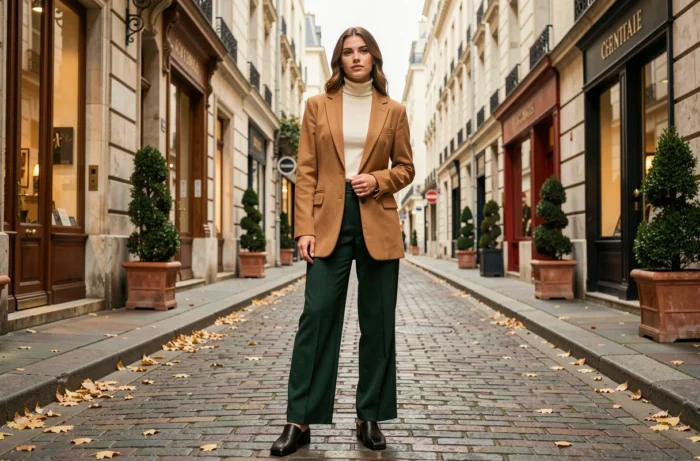
- Updated basics: belted blazer with sharp shoulders, slightly flared trousers, oversized fine-knit sweater. Wearable from Monday to Sunday.
- Gray area: measured transparency (a sheer organza top over an opaque tank) works in the office if the layering is intentional, not improvised.
This type of analysis between durable pieces and seasonal whims is regularly found in the fashion section on Foxoo, which classifies trends according to their potential rotation in a real wardrobe.
Layering daily: stacking without looking like a rack
The 2026 version of layering is no longer about randomly piling on layers. The silhouettes seen on the runways play with proportions: long coat over short blazer, fine-knit top tucked under an open shirt, fluid dress worn over fitted pants.
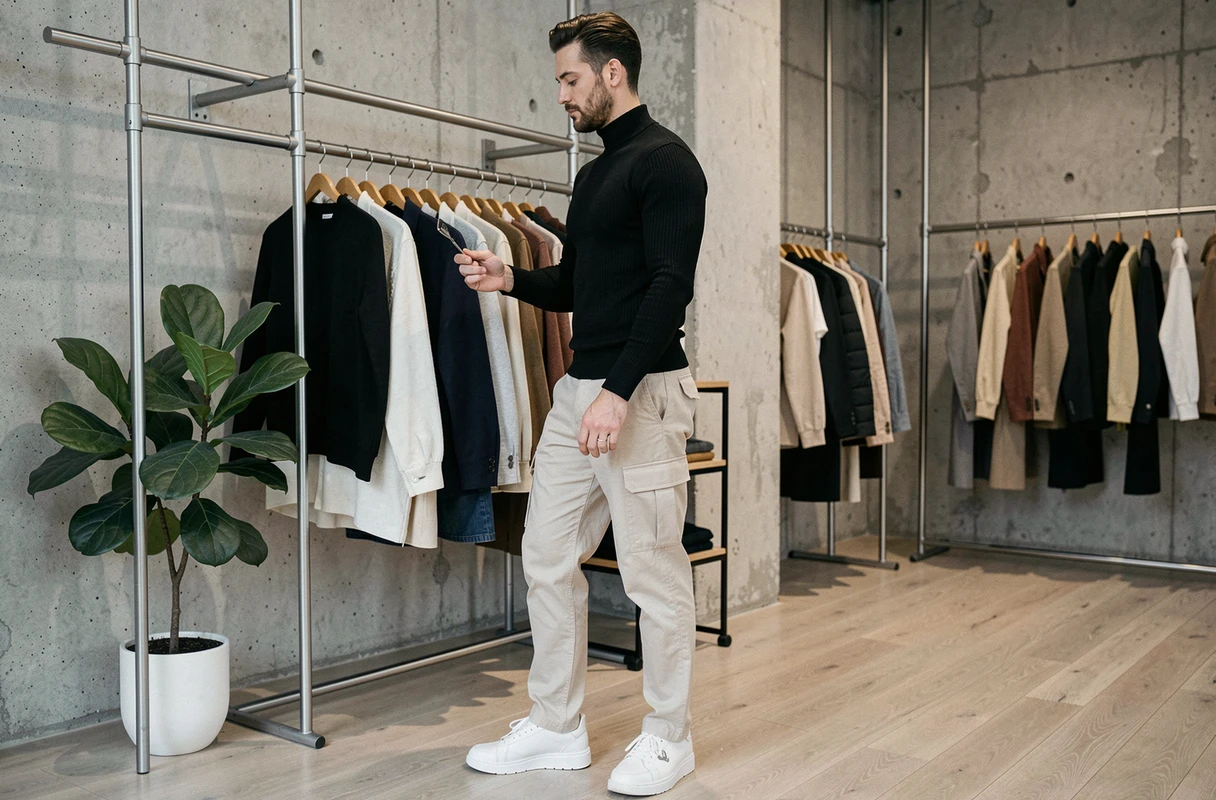
In practice, the rule that works is simple: one loose piece per outfit. If the coat is oversized, the rest should be close to the body. If the pants are wide, opt for a fitted top. Two loose volumes layered create an unstructured effect as soon as you step outside the confines of a photoshoot.
For practical use, start with the thinnest layer and ensure that each addition can be easily removed. A short blazer under a mid-length trench works well as long as you can take off the trench indoors without looking disheveled. It’s this modularity test that separates thoughtful layering from decorative stacking.
A successful layering is judged by the removal, not the addition. If the look collapses when you take off the outer layer, the construction is fragile.
Structured women’s fashion trends: the return of fitted silhouettes
After several seasons dominated by androgynous cuts and generous volumes, more fitted silhouettes are regaining ground. Pencil skirts, sheath dresses, structured blazers with defined waists, A-line dresses: structured femininity is establishing itself as a strong direction for 2026.
This shift does not mean abandoning oversized pieces. The two coexist. The challenge is rather to know when to opt for one or the other depending on the context.
The belted blazer replaces the straight blazer as a key piece in many wardrobes. It structures the silhouette without freezing it, and works just as well over jeans as it does over a midi skirt. For those who find the pencil skirt too formal, the version in thick jersey or ribbed knit offers the same shape with more comfort.
Opinions vary on this point, but the sheath dress seems to work better in a midi version than in a short version for everyday use. Knee-length or just below allows it to be worn with white sneakers or loafers without falling into cocktail territory.
Revisited boho and tenniscore: adapting hybrid styles to real life
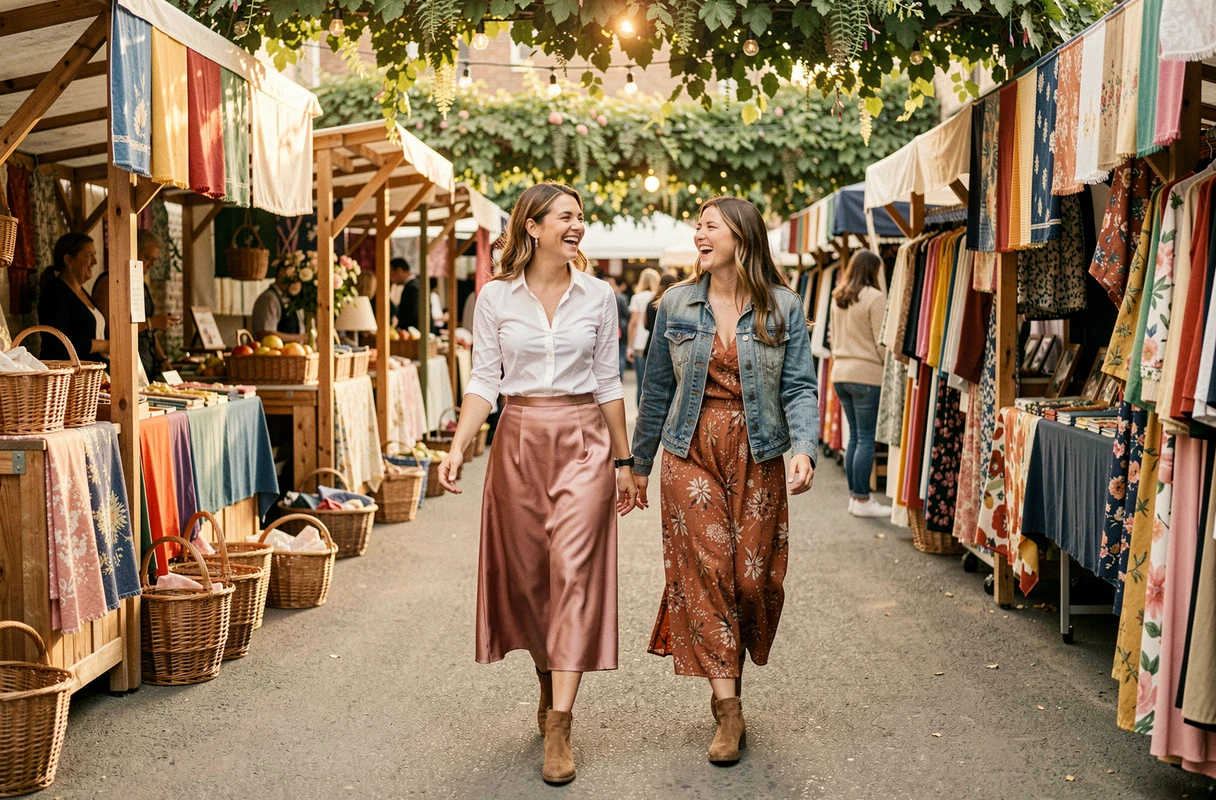
The boho of 2026 has changed its tune. We move away from the festival look (flower crowns, fringes everywhere, layering of ethnic jewelry) towards something more subdued: crafted suede, discreet ruffles, fluid cuts in noble materials. It’s an adult boho that works in meetings as well as on terraces.
In practical terms, a blouse with light ruffles tucked into pleated trousers works better than a loose tunic worn with a braided belt. The first outfit says “personal style.” The second says “thematic costume.”
On the tenniscore side, the trend is to integrate sporty-inspired pieces (short pleated skirts, polos, technical sneakers) into city outfits. A common mistake is to wear the complete ensemble. One sporty piece per outfit is enough to capture the code without slipping into costume territory.
- Mastered boho: one textured piece (suede, crinkled linen, tone-on-tone embroidery) combined with neutral basics. No more than one fringed accessory.
- Urban tenniscore: pleated skirt with a solid knit sweater, or technical polo under a deconstructed blazer. The mix of registers creates the style.
- Common trap for both: buying a “total look” seen on Instagram. What works in photos with carefully crafted lighting loses its coherence under the lighting of an open space.
The fashion trends of 2026 offer enough diversity for everyone to find pieces compatible with their daily life. Sustainable style is built through subtraction: fewer spectacular pieces, more clothes that can be thrown on without thinking and that work in three different contexts. It’s this practical filter, much more than the latest runway show, that distinguishes an inspiring wardrobe from a collection of seasonal whims.