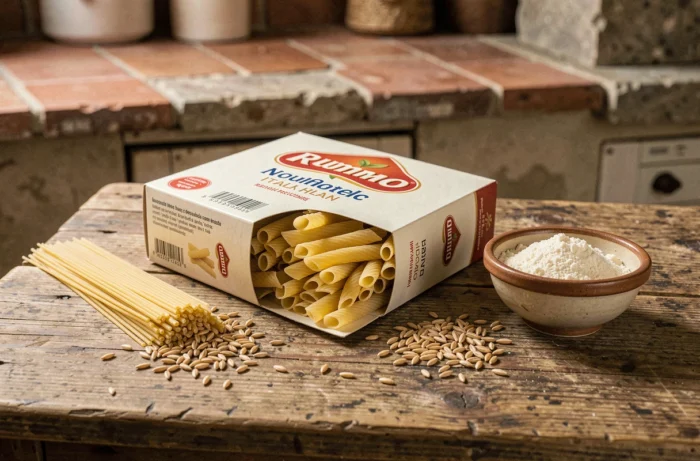
Rummo is an Italian pasta brand founded in Benevento, Campania, whose reputation far exceeds the borders of Italy. Its range is based on a manufacturing process called Lenta Lavorazione, a term that the brand highlights on every package. The question that often arises among French consumers concerns the real difference between these pastas and those of competing brands like De Cecco or La Molisana, sold in the same price range.
Bureau Veritas Certification: What Rummo’s Cooking Quality Really Guarantees
Most premium pasta brands communicate about the quality of their cooking. Rummo stands out for an element rarely mentioned by its competitors: the brand is presented as the first to have its cooking quality certified by Bureau Veritas, a third-party organization specialized in quality certification.
Each batch undergoes internal testing conducted by a dedicated manager (designated with the title “Head of Pasta Testing”) to verify that the pasta remains firm, resistant to chewing, and stable during cooking. This protocol is formalized and audited.
This level of external control provides a guarantee that marketing claims alone cannot offer. To delve deeper into this point, a review of Rummo Italian pasta details the implications of this certification on the cooking experience.
However, the certification pertains to cooking quality, not taste. Flavor depends on other parameters: the quality of the wheat, the extrusion process, and drying. The Bureau Veritas certification says nothing about these aspects.

Lenta Lavorazione and Bronze Extrusion: What Happens During Drying
The Lenta Lavorazione process relies on slow drying at low temperatures. The goal is to preserve the structure of the gluten and the starch from the durum wheat semolina, which allows the pasta to better absorb the sauce without falling apart.
Bronze extrusion, used by Rummo as well as other artisanal brands, gives the surface of the pasta a characteristic roughness. This porous texture clings to sauces more effectively than Teflon extrusion, often used by industrial brands.
What Slow Drying Really Changes
Quick drying at high temperatures speeds up production, but it hardens the outer layer of the pasta while leaving the center more fragile. The result: pasta that cooks unevenly.
Slow drying produces a uniform pasta from the outside to the center. This explains why Rummo pasta holds up well to al dente cooking, even when slightly exceeding the time indicated on the package. Some users report a tolerance of a few minutes beyond the recommended time, while others find the optimal cooking window quite narrow depending on the chosen format.
Rummo Range: Classic, Organic, Gluten-Free, and High Protein Content Formats
Rummo has significantly expanded its range beyond classic durum wheat semolina formats. The brand now offers several distinct lines:
- Classic pasta (spaghetti, penne rigate, fusilli, rigatoni) made from durum wheat semolina, which forms the core of the range and is the most widely available product in French supermarkets
- An organic whole grain line, made from organic whole wheat, with recyclable paper packaging
- Gluten-free pasta made from brown rice and corn, available in several formats including fusilli
- A high plant protein range, referenced under the name “Maxima 21% Protein,” targeting consumers concerned about their protein intake without resorting to animal proteins
This diversification is notable. It positions Rummo not just as a simple manufacturer of durum wheat pasta, but as a brand that covers multiple food segments. The available data does not allow for conclusions about the actual distribution of all these references in France, where the classic range and the gluten-free line are the most visible on shelves.
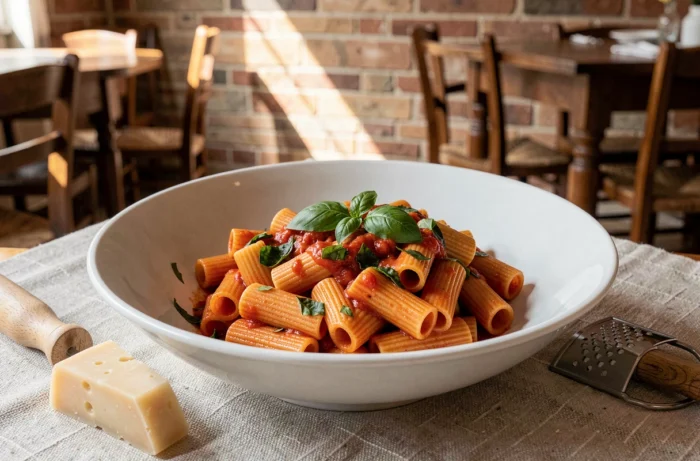
Rummo Pasta Prices Compared to De Cecco and La Molisana: The Price-Quality Ratio in Question
Rummo is positioned in the high range of mass-market pasta, on par with De Cecco and slightly above La Molisana. The price per kilo remains lower than that of artisanal pasta sold in gourmet shops, placing the brand in an interesting middle ground.
The comparison with De Cecco often comes up. Both brands use bronze extrusion and slow drying. The difference lies in the final texture: Rummo tends to offer a slightly rougher surface, while De Cecco produces a pasta that feels a bit smoother to the touch.
What the Choice of Wheat Changes on the Plate
The durum wheat semolina used determines the taste as much as the manufacturing process. Rummo communicates little about the exact origin of its wheat, unlike some brands that display a specific regional provenance. The taste of the cooked pasta remains mild and slightly sweet, characteristic of high-quality semolina, without the bitterness sometimes found in entry-level products.
The water content after cooking also varies depending on the formats. Short formats (penne, fusilli) retain more sauce than long formats, which directly influences the taste perception of the finished dish.
Rummo’s Sustainability Strategy: Decarbonizing the Benevento Factory
Rummo aims to cover about two-thirds to three-quarters of its electrical needs with renewable sources at its production site. The brand announces its intention to fully decarbonize its factory within the next five years.
At the same time, recyclable paper packaging is gradually replacing plastic across several product lines, particularly the organic whole grain range. This transition to paper packaging is visible on the brand’s official website and on the packages available in stores.
These commitments position Rummo among the most advanced pasta manufacturers in terms of environmental aspects. The credibility of these announcements will depend on measurable results in the coming years, but the direction taken is consistent with the growing expectations of European consumers regarding the traceability and ecological impact of food products.
Rummo pasta justifies its pricing position through a controlled manufacturing process, a rare external certification in the industry, and a diversified range that meets various uses. The choice between Rummo and its direct competitors depends on texture and flavor preferences that vary from one format to another.