New products in supermarkets, reformulations related to the Nutri-Score, culinary fusions from Asia or Africa: the gourmet trends of 2026 are evident both on the shelves and on the plates. This article measures what is changing concretely in the French food offering and identifies the currents that influence current recipes.
Nutri-Score 2025-2026: What is changing for gourmet products
The decree of March 14, 2025 activated the new version of the Nutri-Score in France, with a two-year deadline for brands to update their packaging. The revised algorithm reclassifies a significant portion of ultra-processed products into categories D or E.
This update directly affects the new gourmet products on the shelves. Ice cream, biscuit, and snack manufacturers are reformulating their recipes to limit the degradation of their score. The result: less sugary ranges, revised fats, and sometimes modified textures that consumers perceive without always understanding their origin.
| Criterion | Old Nutri-Score | Revised Nutri-Score (2025-2026) |
|---|---|---|
| Classification of ultra-processed products | More lenient distribution | Majority reclassified to D or E |
| Consideration of sugar | More permissive thresholds | Lowered thresholds |
| Compliance deadline | – | Two years from March 2025 |
| Legal obligation (France) | Voluntary | Still voluntary, but increased pressure |
| Legal obligation (Belgium) | Voluntary | Draft laws to make it mandatory in advertising |
In Belgium, draft laws go further: they aim to make the Nutri-Score mandatory in advertising and even to ban advertising for products classified as D or E. Conversely, at the European level, the proposed harmonized labeling promised by the “Farm to Fork” strategy has never been submitted. French brands are therefore navigating a tightening national framework without continental harmonization.
To keep up with the latest on À Nos Petits Fourneaux, product sheets now incorporate these updated nutritional data, allowing for informed comparisons of new products.
Fusion cuisine and fermented flavors: the rising recipes
Culinary hybridization remains a driver of creativity. After the cronut and the pizza-bagel, the combinations of 2026 draw from broader registers: sushi-tacos, banh mi-burgers, or even chou-kouign (a cross between a craquelin cabbage and a kouign-amann). These fusions are not mere gimmicks. They combine complementary techniques, such as Asian steaming associated with Mediterranean seasoning with sesame and herbs.
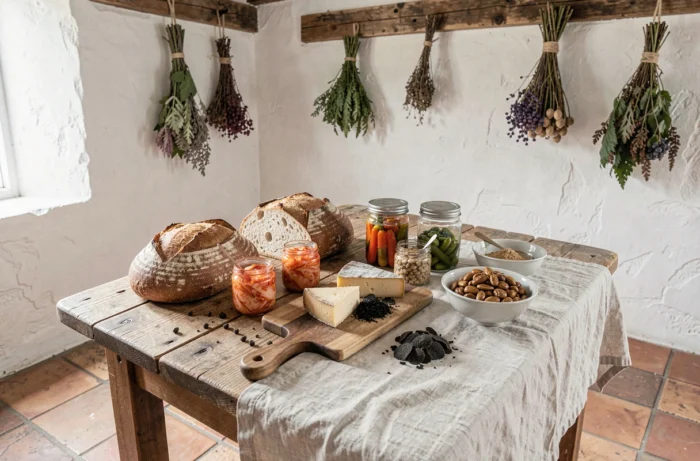
Fermentation extends this logic of flavor exploration. Kimchi, miso, and kombucha have transitioned from niche ingredients to common bases in home recipes. Their appeal goes beyond taste: lactic fermentation provides an acidity that replaces vinegar or lemon in a salad and alters the texture of vegetables.
- Kimchi is now used as a condiment in burgers, omelets, or rice bowls, far beyond traditional Korean cuisine.
- Miso is incorporated into pasta sauces, marinades for white meat, and even salted caramel desserts.
- Kombucha serves as a base for dressings and deglazing, adding a slight effervescence to hot dishes.
These fermented ingredients share a common point: they allow for reducing added salt and sugar without losing flavor intensity, aligning with the regulatory pressure of the Nutri-Score on processed products.
Gourmet products for the first half of 2026: what is coming to shelves
The first half has seen the emergence of several ranges that illustrate these trends. The ice cream segment focuses on texture combinations (crunches, coulis, biscuits) to refresh the offering, while coffee in capsules diversifies with more pronounced roasts and an accessible positioning.
These launches reflect a dual expectation from consumers: the indulgent pleasure on one hand, and the search for less processed products on the other. The brands that succeed in 2026 are those that manage to reconcile both, offering shorter recipes (fewer additives) while maintaining a rich sensory experience.
Snacking and on-the-go formats
The snacking market continues to grow, with an increasingly segmented offering. Vegetable chips, legume-based protein bars, and sesame crackers are gaining shelf space. The individual format dominates: it caters to both meals taken outside the home and the trend of conscious snacking between meals.

African cuisine and mushrooms: two underlying trends
African cuisine is gaining visibility in restaurants as well as in online recipes. Peanut-based sauces, spices like soumbala or Timiz pepper, and grains like fonio or teff are appearing in fusion dishes that blend French techniques with West African flavors.
This movement is supported by the diaspora, the opening of specialized restaurants in major cities, and a growing offering of African spices and condiments in gourmet grocery stores.
Mushrooms are experiencing a comparable enthusiasm. Shiitake, oyster, enoki: these varieties, long confined to organic stores, are now found in mainstream aisles. Their meaty texture makes them a credible substitute for meat in saucy dishes. Some restaurants offer grilled oyster mushroom steaks or shiitake-enriched dashi broths as main dishes, rather than as sides.
- Fonio, a gluten-free grain grown in West Africa, is cooked like couscous and absorbs spicy sauces well.
- Dried shiitake, rehydrated in broth, provides a deep umami that replaces industrial bouillon cubes.
- Mushroom pickles (lactic fermentation) combine the fermentation trend and the fungal trend in a single condiment.
These two currents share a technical point: they enrich the field of umami flavors available in home cooking, where the classic French palette relied more on butter, cream, and veal stock.
The gourmet trends of 2026 are not just passing fads. The tightening of the Nutri-Score pushes manufacturers to reformulate, fermentation and African cuisine expand the repertoire of flavors accessible in daily life, and the products on shelves reflect these two simultaneous movements. The common thread remains the same: shorter ingredient lists, longer in flavor.