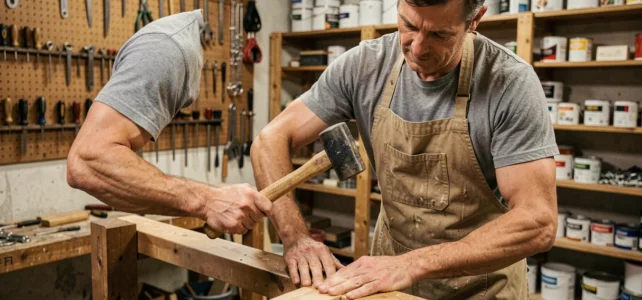
When it comes to filling a crack in the wall, replacing a tile, or installing a shelf, we often find ourselves rummaging through a drawer in search of a specific tool. Among the most commonly used DIY tools at home, those that start with the letter M cover an surprisingly wide range: measuring, striking, cutting, electricity. Here is a selection of fifteen of them, organized not in alphabetical order, but by category of concrete actions.
Tape measure and laser measure: two measurement logics to distinguish
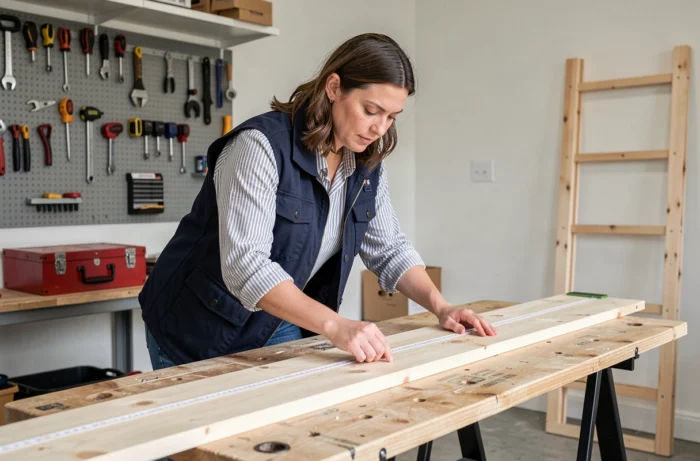
Before drilling, sawing, or gluing anything, we measure. The tape measure remains the basic reflex for taking a measurement on a piece of furniture, checking the gap between two battens, or controlling the height of a wall. Its main advantage lies in its mechanical reliability: no battery, no calibration.
The laser measure, on the other hand, takes over for long distances or hard-to-reach rooms. On this point, the DGCCRF has noted labeling defects on some consumer laser distance meters, with discrepancies between the announced laser class and the actual class. Before purchasing, check the CE marking and the class indicated on the device.
Each DIY tool starting with m serves a role that others do not cover, and the folding measure complements the tape-laser duo well for small measurements in the workshop.
Hammer, mallet, and maul: choosing the right striking tool
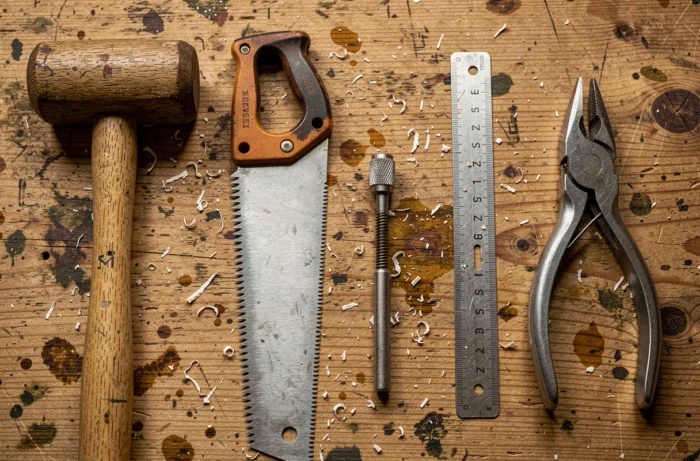
The carpenter’s hammer is used to drive nails into wood or drywall. It is the universal striking tool, the one you grab without thinking. For more delicate work (furniture assembly, laying floating floors), the rubber mallet absorbs the shock without marking the surface.
The maul is used on hard materials: breaking up old floor tiles, roughing up a brick wall before renovation, or driving a chisel. Its heavier weight concentrates the striking force.
- Carpenter’s hammer: nails, small wood assemblies, wall hanging
- Rubber mallet: laying laminate or hardwood flooring, adjusting parts without damage
- Maul: light demolition, chiseling work on walls or tiles
We keep all three in the toolbox. Opinions vary on the ideal weight of the maul, but a model around one kilogram is suitable for most household tasks.
Angle grinder and mini-drill: cutting and finishing materials
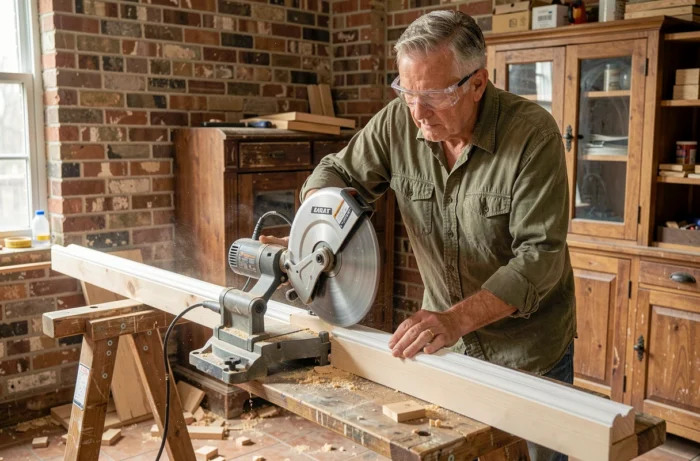
The angle grinder cuts metal, tiles, and even concrete with the appropriate disc. It is a versatile tool that replaces several specialized saws when working on small sections. For straight cuts in PVC or thin wood, a hand saw is more suitable, but the grinder excels on hard materials.
The mini-drill (often referred to by its generic name as a rotary tool) is used for engraving, sanding, polishing, or cutting small pieces. It is used to adjust a hinge, deburr a cut, or clean rust in an inaccessible corner.
The market for power tools is increasingly shifting towards cordless. Battery-powered platforms now dominate the offering, making it easier to switch from one tool to another when using the same brand.
Repairability: what the law now requires
Since the extension of the rules related to the AGEC and Climate and Resilience laws, spare parts for certain powered tools must remain available for at least five years. This changes the game at the time of purchase: a tool without a network of parts is not worth the investment, even at a low price.
Multimeter and everyday electrical tools
The multimeter measures the voltage, current, and resistance of a circuit. It is used to check that a wire is indeed de-energized before intervention, test a suspicious outlet, or diagnose a fault in a household appliance. It is a tool for both safety and diagnosis.
Next to the multimeter, the insulating sleeve protects electrical connections after soldering or connecting. And the wood bit (or flat bit) allows for clean drilling of cable passages in partition studs.
Adjustable pliers, trowel, and other manual tools starting with M
The adjustable pliers are one of those tools that are used well beyond plumbing. Tightening a nut, holding a pipe, loosening a fitting: it adapts to various diameters thanks to its adjustable jaw.
The trowel is used to dig and shape plaster or joint compound during wall renovation work. Its looped metal profile removes material with precision, which avoids having to redo an entire surface.
- Sealant and caulking gun: sealing bathroom joints, glazing installation, finishing around woodwork
- Wallpaper smoother: removing air bubbles under wallpaper or a decorative wall film
- Cutter wheel (on manual tile cutter): marking a clean cutting line on tiles before breaking
These manual tools cost almost nothing and prevent the need to redo poorly finished work. They are often forgotten in lists, but they are the ones that make the difference between a clean result and a rough DIY job.
A well-assembled M tool kit covers measuring, striking, cutting, electrical diagnostics, and finishing. Rather than accumulating equipment over time through promotions, we select each tool based on a specific action to be performed. It is the project that dictates the purchase, not the other way around.