
A sharp pain under the ribs on the right side, with no visible redness on the skin. In a person over 65 years old, this scenario often leads to the emergency room for suspicion of a cardiac or biliary problem. Shingles after 65 often begins with this deceptive phase, where pain precedes the rash by several days, complicating diagnosis and delaying antiviral treatment.
Prodromal phase of shingles after 65: pain without visible lesions
Before any blisters appear, shingles starts with a period of isolated pain lasting from two to seven days. Burning, stabbing, or hypersensitivity to touch is observed in a specific area of the body, often on one side of the chest or face.
In seniors, this prodromal phase is longer and more intense than in younger adults. The skin appears normal upon examination, which misleadingly points towards other diagnoses. Intercostal pain attributed to a heart attack or digestive disorder is a common pitfall. Hip or back pain is sometimes attributed to osteoarthritis.
Marked fatigue, headaches, general malaise, sometimes a slight fever, and photophobia are also present. All these symptoms, grouped without skin lesions, can last long enough for the patient to consult multiple times before shingles is considered. Visual resources like photos of shingles after 65 on Doctinews help to better understand each stage of the disease, including this period when nothing is yet visible.

Shingles rash in seniors: appearance and evolution of vesicles
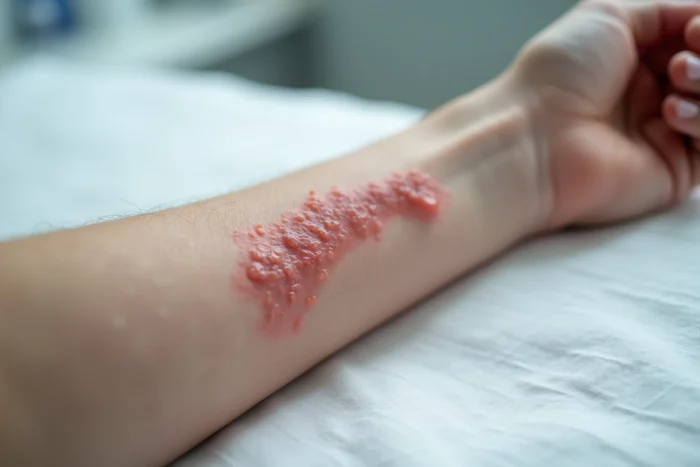
When the first lesions appear, they present as red plaques (erythematous macules) clustered along the path of a single nerve. Within hours, these plaques become covered with small vesicles filled with clear fluid, arranged in clusters.
Days 1 to 3: clusters of tense vesicles
The vesicles are initially tense, translucent, sitting on a red and swollen base. They may itch at times, but it is mainly the pain that dominates in those over 65. The affected area remains strictly unilateral, which helps to distinguish shingles from other skin rashes.
Days 3 to 7: cloudy fluid and beginning of crusts
The contents of the vesicles gradually become cloudy, even purulent. Some may rupture spontaneously, leaving superficial, oozing erosions. This is when the risk of bacterial superinfection is highest, especially in patients with weakened immune systems. It is recommended not to scratch or puncture the vesicles.
After a week: drying and healing
The vesicles dry out and form brownish crusts. This phase typically lasts two to three weeks. In seniors, complete healing often takes longer and may leave pigmented marks on the skin.
- Lesions always follow a dermatome (nerve territory), most often thoracic, resulting in a band of vesicles from the back to the front of the trunk
- Ophthalmic shingles affects the branch of the trigeminal nerve and can threaten vision, with vesicles on the forehead, eyelid, or nose
- A rash that crosses the midline of the body or covers multiple dermatomes should raise concern for disseminated shingles, more common in immunocompromised individuals
Postherpetic pain after 65: the most common complication
The vast majority of young adults recover from shingles without lasting effects. After 65, the picture changes. Postherpetic neuralgia affects a significantly higher proportion of seniors and can persist for months, sometimes years.
These pains occur in the same area as the initial rash, even after the skin lesions have completely disappeared. They are described as continuous burning, electric shocks, or extreme sensitivity to the mere touch of clothing on the skin. At night, they severely disrupt sleep.
Time plays a crucial role. An antiviral treatment started within 72 hours of the rash reduces the risk of chronic pain. Beyond this timeframe, effectiveness decreases. This is why the diagnostic delay related to the deceptive prodromal phase in seniors is particularly problematic.
- Consult a doctor as soon as unilateral vesicles appear, without waiting for spontaneous resolution
- Report any persistent pain beyond three months after the healing of lesions: a specific treatment for neuropathic pain may be implemented
- In the case of ophthalmic shingles, consult an ophthalmologist urgently to prevent complications on the cornea
Shingles and vaccination after 65: reducing the intensity of symptoms
Vaccination recommendations have evolved in recent years in France. Vaccination does not eliminate the risk of shingles but reduces the severity of the rash and the intensity of postherpetic pain in vaccinated individuals. For seniors who have already had an episode of shingles, vaccination remains relevant since recurrences do exist.
Feedback varies on vaccine tolerance depending on profiles, but local reactions (pain at the injection site, redness) remain the most common side effects. The treating physician or dermatologist evaluates on a case-by-case basis, especially in immunocompromised patients or those undergoing cancer treatment.

Recognizing the stages of shingles after 65, from pain without lesions to residual neuralgias, allows for swift action on the only truly effective lever: initiating antiviral treatment within the first three days. Any unexplained unilateral pain in a senior warrants consideration of shingles, even if the skin appears perfectly normal.