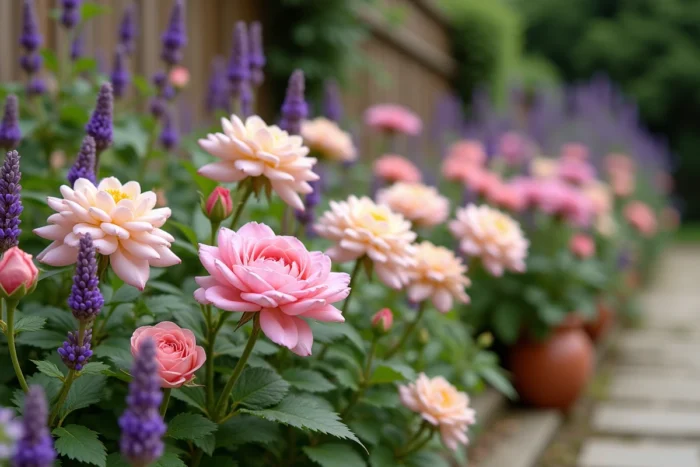
The choice of a variety of flowers for a garden is not just a matter of taste. The soil, exposure, frequency of watering, and duration of flowering determine the success of a flower bed as much as the color palette. With recurring drought episodes and increasing water restrictions, the criteria for selecting flower varieties have significantly evolved in recent years.
Soil and exposure: two filters before any variety selection
Before browsing a catalog, one must know the nature of their soil. Heavy clay soil retains water and is suitable for irises, which tolerate winter moisture. Sandy, well-draining soil is better suited for lavenders or gauras, whose roots rot in compacted soil.
Exposure is the deciding factor. A south-facing flower bed receives direct sunlight for six to eight hours in summer. Lilies thrive there, while columbines scorch. Conversely, a semi-shaded bed under a deciduous tree is well-suited for perennial geraniums and cyclamens, which benefit from filtered light in spring before the foliage unfolds.
This preliminary diagnosis often eliminates half of the varieties one might consider. It also avoids costly failures: a poorly placed plant does not bloom or survives just one season before disappearing. Among the flowers to discover on Jardindivert, this logic of soil-exposure compatibility is well documented for each species.
Drought-resistant perennials: flower varieties for water-efficient gardens
Gardening advice published since 2023-2024 emphasizes flowering plants that are very low in water consumption. Repeated heatwaves and watering restrictions prompt a reevaluation of flower bed compositions, even in regions once spared.
Several Mediterranean perennials stand out for their ability to bloom without regular irrigation:
- The euphorbia characias produces green-yellow inflorescences from spring and withstands weeks without rain once established, thanks to its evergreen foliage that limits evaporation.
- The gaura lindheimeri offers airy blooms from June to the first frosts. Its slender stems and white or pink flowers add movement to a dry bed.
- The crepe myrtle (Lagerstroemia) blooms in the height of summer, when most shrubs have finished their cycle. Its clusters of pink, mauve, or white flowers last for several weeks.
- The bignonia, a vigorous climber, covers a wall or pergola with trumpet-shaped orange flowers without needing more than well-drained soil and sunlight.
These plants share a common trait: a deep root system that captures residual soil moisture. The first seasons after planting remain critical, requiring supplemental watering. After two or three years, they manage on their own in most gardens in southern and central France.
Staggered flowering from spring to autumn: pairing the right species
A garden that remains in bloom for several months requires planning based on flowering periods. The classic pitfall is to concentrate purchases on spectacular varieties in spring, only to find a completely green bed by July.
Flowering relay by season
In spring, irises and Asian lilies kick off the show. Their blooms are brief (two to four weeks) but intense in color. To take over in summer, perennial geraniums like Rozanne bloom continuously from June to October. Their continuous flowering for over four months makes them rare allies in long-lasting compositions.
In autumn, asters and Japanese anemones extend the season when most plants are tiring. The Japanese anemone, in particular, produces its pink or white flowers starting in September and withstands the first cold snaps without flinching.
Playing with foliage between blooms
Varieties with decorative foliage fill the gaps. Heucheras, with their purple, bronze, or silver leaves, maintain visual interest all year round. Ornamental grasses like miscanthus add volume and movement even in winter when their spikes dry and take on golden hues.
A well-designed flower bed relies on at least three layers of flowering: an early, a summer, and a late one. Each layer should include at least two different varieties to prevent a visible gap from a single failure.
Flowering meadows and seed mixes: an alternative to traditional flower beds
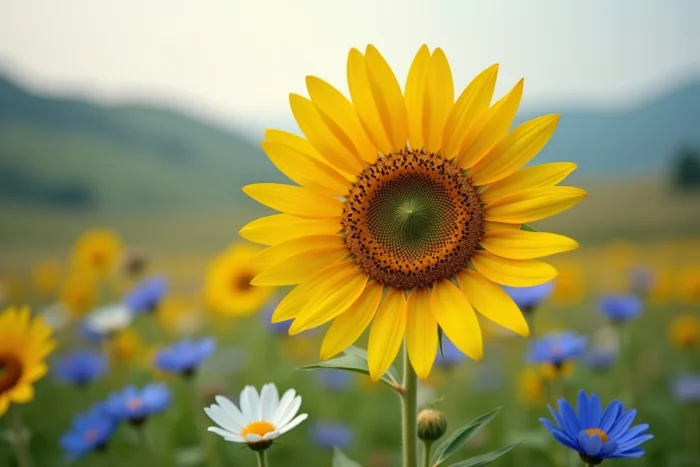
Major gardening retailers now offer ready-to-sow seed mixes designed to create flowering meadows that are beneficial to pollinators. This approach meets a dual expectation: a more natural appearance and reduced maintenance compared to traditional flower beds.
The mixes generally combine annuals (poppies, cornflowers, cosmos) and perennials (daisies, yarrow, clovers). The result varies from year to year: annuals dominate the first season, then perennials gradually take over.
Field reports vary on this point. Some gardeners achieve spectacular results in the first year, while others find a dominance of weedy grasses if soil preparation has not been sufficient. The determining factor seems to be initial weeding: sowing on poorly cleaned soil yields disappointing results, regardless of the quality of the mix.
Public biodiversity policies also encourage these practices. Several local authorities adopt pesticide-free specifications for their green spaces, with diverse flowering meadows replacing traditional horticultural beds. This trend is gradually spreading to private gardens.
The choice of a flower variety for one’s garden is best approached as a diagnosis rather than as a catalog. Soil, exposure, water availability, and flowering periods form a technical framework that guides decisions much more reliably than aesthetics alone. Varieties adapted to these local constraints are also, most often, those that require the least maintenance over time.