Arranging and decorating a home is based on precise technical principles before it becomes a matter of taste. The layout of furniture, the choice of materials, and the management of light condition daily comfort. Starting from these fundamentals allows for a coherent interior without multiplying unnecessary purchases.
Proportions and circulation: the foundation of a successful layout
Before choosing a wall color or a style of furniture, the first question concerns the circulation between rooms. A passage that is too narrow between a sofa and a coffee table, a hallway cluttered with an oversized dresser: these proportional errors create a constant discomfort that decoration will not correct.
The principle is simple: each piece of furniture must leave enough clearance space to move without contortion. In a living room, placing the sofa first and organizing the rest around it prevents the room from becoming overcrowded. In an open kitchen, the countertop benefits from being oriented towards the living space to facilitate movement.
For an interior where one can discover the Blog Habitat site and draw concrete references, this circulation logic remains the starting point for any layout project, regardless of the budget.
Raw materials and earthy colors: the decor palette that stands out
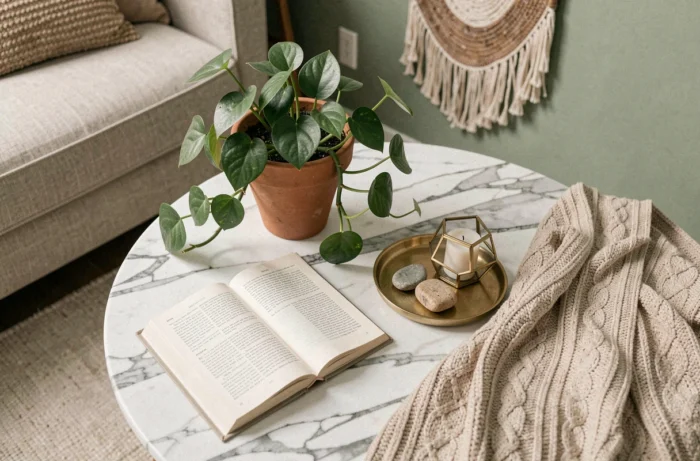
The decor trends observed in 2025-2026 mark a clear shift. White interiors and cool grays are giving way to a palette of deep and earthy colors: emerald green, midnight blue, ochres, terracotta, sage green. This shift is not cosmetic; it reflects a need for visual warmth in often standardized spaces.
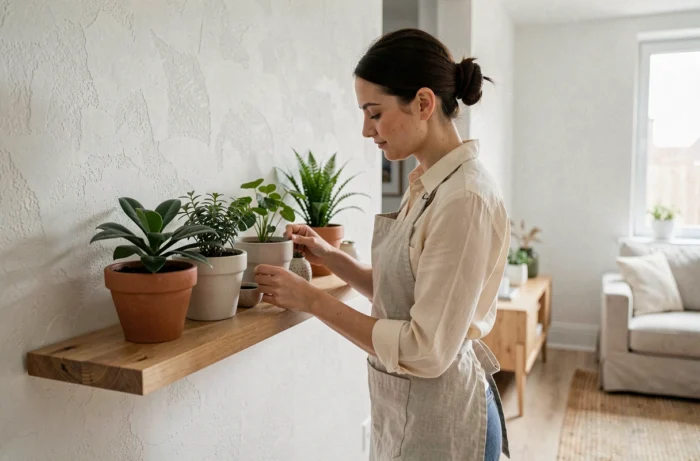
On the materials side, travertine, light wood, ceramics, and recycled hemp replace lacquered surfaces and plastics. These natural and raw materials bring texture without overloading the decor. A travertine table top or solid wood shelves are enough to anchor an organic style in a room.
The furniture follows the same direction with organic shapes and soft curves, far from systematic right angles. A sculptural armchair or a lamp with rounded volumes creates a focal point without requiring heavy transformation.
Applying these materials without replacing everything
Changing all the furniture to follow a trend makes no economic sense. The most effective approach is to intervene on a maximum of three elements in each room:
- The textiles (cushions, curtains, rugs): switching to natural fibers like linen or thick cotton in earthy tones radically changes the ambiance of a living room or bedroom.
- An accent piece: replacing a coffee table or console with a model made of raw material (wood, stone, ceramics) is enough to refocus the style of the room.
- The walls: painting one wall in a deep color (terracotta, sage green) transforms the perception of space without engaging in major renovations.
Layered lighting: structuring the ambiance room by room
Lighting is the most underestimated decoration lever. A single ceiling light flattens volumes and dulls the reliefs of the furniture. The technique used by interior architects relies on layering multiple light sources at different heights.
The first layer, called functional, ensures overall visibility: a pendant above a dining table, adjustable spotlights in a kitchen. The second layer, ambient, adds warmth: a table lamp on a low piece of furniture, a discreet string of lights, wall sconces. The third layer, accent, highlights an object or a corner of the room: a reading lamp, shelf lighting.
Multiplying light points does not mean multiplying expenses. Three well-placed sources transform a living room more than an expensive chandelier installed alone in the center of the ceiling. The goal is to create areas of shadow and light that give relief to the space.
Color temperature: a detail that changes everything
Light bulbs are distinguished by their temperature, measured in kelvins. A warm light is suitable for living spaces (living room, bedroom), while a cooler light promotes concentration in an office or kitchen. Mixing the two in the same room creates a visual inconsistency that the brain perceives as discomfort, without always identifying it consciously.
Integrated storage: decorating by eliminating the superfluous
Visual clutter is the main obstacle to successful decoration. No choice of color or furniture compensates for the accumulation of objects without a defined place. An effective storage solution is already an act of decoration.
Double-function furniture (bench with storage, bed with drawers, extendable table) solves this problem in small spaces. In larger rooms, open shelves allow for the display of a few chosen objects while storing the rest in baskets or boxes that match the room’s style.
- In the entryway, a narrow piece of furniture with hooks and shoe storage prevents clutter right at the threshold of the house.
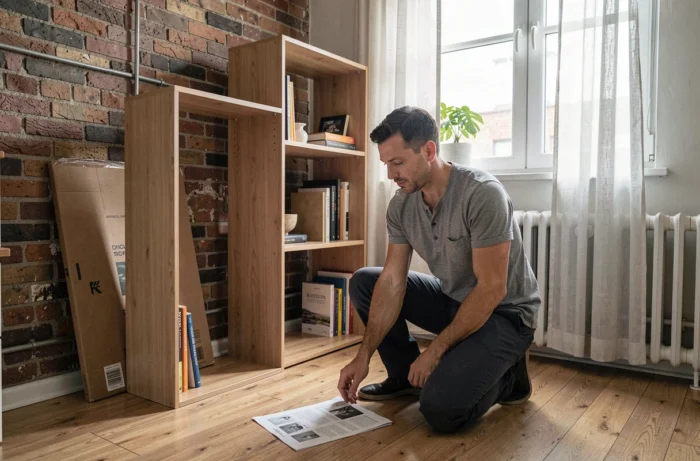
- In the living room, a wall bookshelf structures an entire wall and offers a natural decorative backdrop.
- In the bedroom, bedside tables with drawers and a headboard with a niche eliminate the need for additional furniture.
The idea is not to empty the house but to give a precise place to each object. An interior where nothing is left lying around appears immediately more spacious and more decorated, even with modest furniture.
Effectively arranging and decorating relies less on a budget than on a hierarchy of priorities: circulation first, materials and colors next, lighting third, storage continuously. A single well-targeted change in each room produces a more visible result than a poorly prioritized complete overhaul.